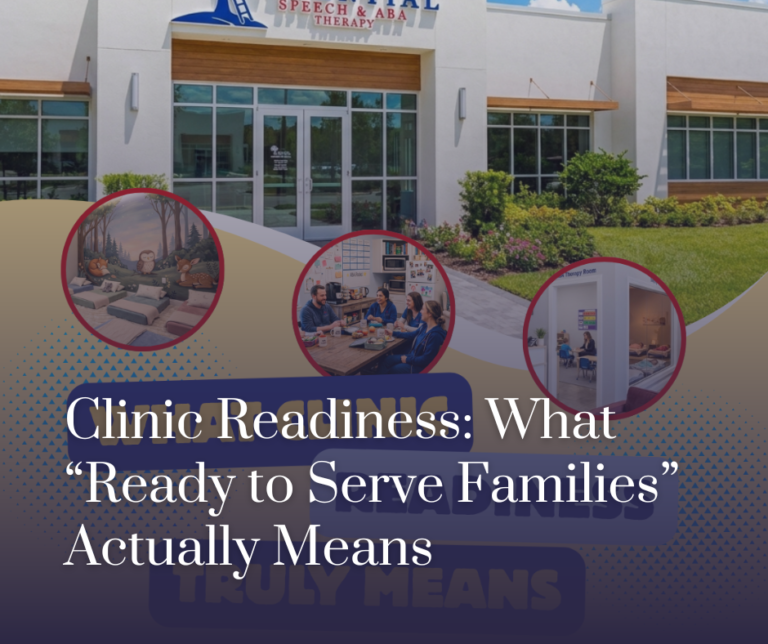
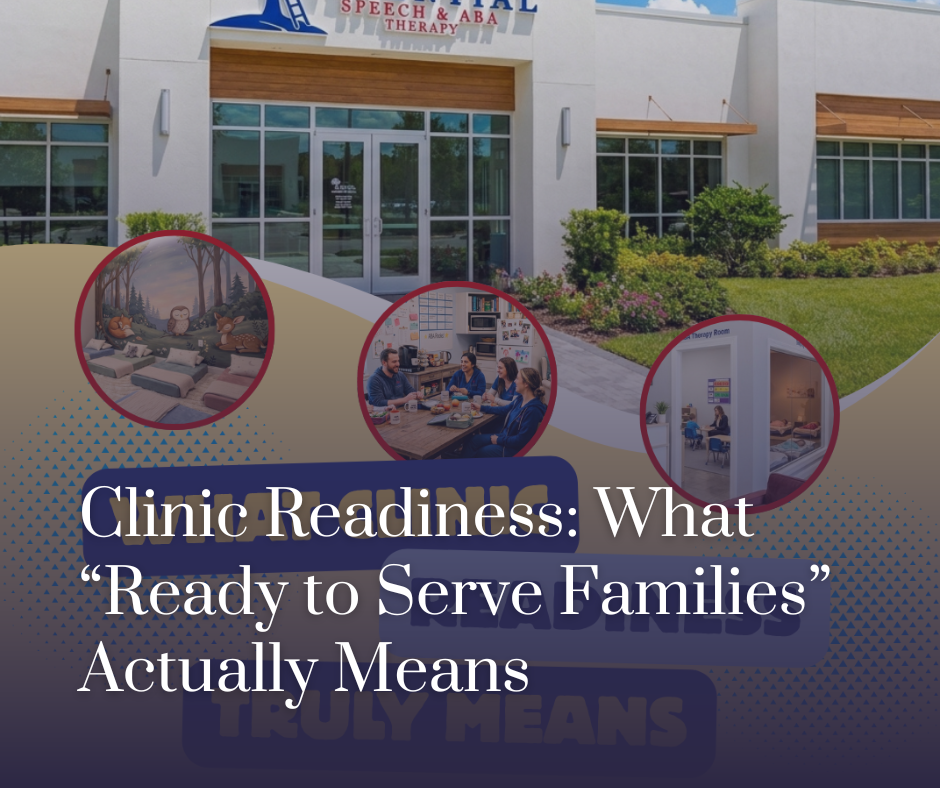
When opening a new clinic, cutting a ribbon and unlocking the front doors is not the true finish line. In developmental healthcare, there is a vast operational divide between a facility that is simply open and a clinic that is genuinely ready to serve families.
For a family walking through your doors, deciding to begin therapy for their child represents a moment of immense trust. They are seeking a safe, structured, and clinically sound environment where their child can thrive. Delivering on that promise from Day 1 requires far more than aesthetic real estate and enthusiastic staff. It demands an uncompromising framework of operational, environmental, and clinical readiness.
To ensure every new location meets this standard, our opening process relies on a rigorous 8-category readiness framework. Here is what “ready to serve” actually looks like behind the scenes.
The 8 Pillars of Operational & Clinical Readiness
Before a single child enters a new clinic for an assessment or therapy session, the location must pass a comprehensive validation process across eight distinct operational domains:
1. Legal & Occupancy
A clinic cannot deliver care without absolute legal and structural compliance. Readiness begins with verified Certificates of Occupancy (CO) that explicitly match pediatric healthcare use, active business licenses, municipal permits, and comprehensive liability insurance. Furthermore, essential utilities (power, water, secure phone lines, and high-speed internet) must be active and fully tested.
2. Facility & Safety (SOFA Framework)
Physical safety is non-negotiable. Every therapy room, natural environment teaching (NET) play area, and administrative zone must undergo a meticulous safety walkthrough. This includes:
- Childproofing: Installing outlet covers, securing extension cords, anchoring tall furniture, protecting sharp corners, and locking away all cleaning chemicals, office supplies, and small choking hazards.
- Emergency Preparedness: Clear emergency exit paths, stocked first-aid stations, accessible fire extinguishers, and secured exterior doors to mitigate elopement risks.
3. Staffing & Coverage
A clinic is only as strong as the team running it. True readiness means signed offer letters and confirmed start dates for key leadership, including the Office Manager (OM) and Board Certified Behavior Analyst (BCBA). Additionally, the clinic must maintain an active recruitment pipeline for Registered Behavior Technicians (RBTs) and a documented coverage plan to handle administrative or clinical absences without interrupting care.
4. Systems & Data Management
Smooth operations depend on centralized software infrastructure. Readiness requires verifying that the clinic profile, intake pipelines, client scheduling, and documentation templates are fully configured. Office Managers must demonstrate live mastery of entering leads, managing demographic and insurance data, and updating schedules in real time.
5. Training & Competency
Possessing systems is useless if the team cannot operate them with precision. Prior to opening, the Franchise Owner (FO), Office Manager, and BCBA must complete specialized onboarding modules. Competency is verified through live roleplays (such as mock intake calls, scheduling adjustments, and safety escalation drills) to ensure every staff member can execute their role seamlessly.
6. Clinical Go-Live Validation
Operational readiness must be matched by clinical rigor. Before launching services, the BCBA undergoes a simulated “Go-Live” evaluation. This involves completing a mock assessment, drafting a peer-reviewed treatment plan, running a mock supervision session, and passing a documentation audit. This step guarantees that clinical data collection, defensibility standards, and supervision schedules are rock-solid from the very first case.
7. Family Experience & Brand Standards
A family’s onboarding experience sets the tone for their entire therapeutic journey. Readiness involves training staff on clinic tour scripts, parent onboarding checklists, and clear communication templates for document collection. Caregivers should leave their initial tour with absolute clarity regarding next steps, assessment timelines, and coverage verifications.
8. Quality Monitoring Foundations
Opening day is just the start of continuous quality assurance. To maintain standards over time, clinics establish early warning indicators, a 30-day staff training calendar, a structured audit cadence, and data integrity SOPs for their first 90 days of operation.
Key Roles in the Readiness Checklist
Achieving full clinic readiness requires seamless cross-functional accountability across three core leadership roles:
| Operational Category | Primary Role Responsible | Core Focus & Deliverables |
| Legal, Risk & Franchisor Alignment | Franchise Owner (FO) | CO, business licenses, active insurance policies, executive oversight |
| Facility, Systems & Administration | Office Manager (OM) | Physical safety audits, CentralReach intake, scheduling, parent communication |
| Clinical Excellence & Quality | BCBA / Clinical Lead | Mock assessments, peer-reviewed plans, supervision calendars, audit compliance |
Why We Never Cut Corners on Opening Day
In the rush to open doors and begin serving clients, it can be tempting for healthcare operators to overlook minor administrative gaps or bypass simulated clinical drills. However, launching a clinic prematurely introduces severe operational risks: fragmented intake pipelines frustrate families, unanchored furniture poses physical hazards, and unverified data collection systems compromise clinical outcomes.
By holding every new location to a strict, evidence-based opening checklist, we eliminate guesswork and protect the family experience.
When we say a clinic is “ready to serve families,” it means that every outlet is covered, every system is tested, every clinician is validated, and every team member is fully prepared to deliver safe, exceptional, and life-changing care from day one.