9 Things Every New Franchise Owner Should Know

Uncategorized

Becoming a franchise owner is one of the most exciting steps in an entrepreneur’s journey. You’re buying into a proven model with built-in brand recognition, support, and systems designed to help you succeed. But even with these advantages, running a franchise is still running a business – it requires planning, dedication, and a willingness to learn.

Whether you’re just beginning your franchise journey or preparing to sign your agreement, here are nine things every new franchise owner should know, illustrated with lessons real franchisees often learn along the way.

1. You’re Buying a System, Not Just a Brand

When you invest in a franchise, you’re not just paying for the logo or the brand name. You’re buying into an established system with a set of processes, guidelines, and best practices developed over years of trial and error.

Many first-time franchisees are tempted to improvise or make big changes right away. Resist that urge. Franchises work because of consistency. By sticking to the system, you’ll build a strong foundation before experimenting with anything new.

Takeaway: 

Follow the playbook first. Once you’ve mastered the system and are profitable, you can look for smart ways to innovate within the franchisor’s guidelines.

2. Your Franchisor is a Partner, Not a Boss

It’s important to understand the relationship dynamic between you and your franchisor. They are not your employer, and you are not their employee. Instead, it’s a partnership—you own your business, but you’ve agreed to run it within their framework.

Think of it like buying a recipe from a world-class chef. The chef gives you the ingredients, the instructions, and even the plating suggestions. But it’s still your kitchen, and you have to do the cooking. The most successful franchisees know how to leverage their franchisor’s support while taking full ownership of their results.

Takeaway: 

Treat your franchisor as a business partner. Communicate openly, use the support they provide, and don’t expect them to do the work for you.

3. Cash Flow is More Important Than Profit at First

Many new franchise owners underestimate how much working capital they’ll need. Even if your business is generating revenue quickly, expenses like rent, payroll, supplies, and marketing will pile up. Cash flow – the money available to run daily operations – is what keeps your doors open.

You may be “profitable on paper” but still struggle to pay bills if cash flow isn’t managed carefully. Plan for at least six months of operating expenses as a buffer, and keep a close eye on your financial reports.

Takeaway: 

Profit is the long-term goal, but cash flow is what keeps you in business day-to-day.

4. Location and Local Marketing Matter More Than You Think

Even with a recognizable brand, your local presence makes or breaks your franchise. The right location increases your visibility and customer access, while smart local marketing drives traffic through your doors.

Your franchisor may provide national or regional marketing campaigns, but don’t assume that’s enough. You’ll need to supplement with grassroots efforts (community events, sponsorships, partnerships, and targeted digital ads) to connect with customers in your territory.

Takeaway: 

National brand recognition gets you noticed, but local marketing gets customers in your door.

5. Your Team Will Determine Your Success

One of the fastest lessons new franchise owners learn is that success is tied directly to the strength of their team. Hiring, training, and retaining the right people is essential.

Employees are the face of your business. They’re the ones interacting with customers, delivering the service, and representing the brand. Invest in building a culture where your team feels valued and motivated. Turnover is costly and disruptive, so focus on creating an environment where people want to stay. This may mean moving a bit slower early, so your business has the stamina to run long-term/

Takeaway: 

Your business will only be as strong as the people running it day-to-day.

6. Compliance is for Protection

Franchises rely on brand consistency. That means you’ll be required to follow certain standards for everything from signage and uniforms to product offerings and customer experience. These aren’t suggestions, they’re part of the deal.

It may feel limiting at times, but this is to project your business.

Imagine if every location of your favorite coffee chain had a different menu or different service rules. Customers would lose trust quickly. By sticking to compliance, you protect not just the brand, but also the reputation that customers already recognize.

Takeaway: 

Compliance may limit some creative freedom, but it safeguards your investment and ensures customers know what to expect.

7. Networking With Other Franchisees is a Hidden Advantage

One of the biggest benefits of joining a franchise system is the built-in community of other owners who have walked the same path. These franchisees are an incredible resource for advice, mentorship, and problem-solving.

Don’t be afraid to reach out to them. Most franchisees are happy to share what’s working in their markets and help new owners avoid common pitfalls.

Takeaway: 

Your peer network is just as valuable as the support you receive from the franchisor. Build relationships with fellow franchisees early.

8. Franchising Isn’t “Turnkey”

Some people mistakenly believe that buying a franchise means they’re purchasing a business that will run itself. While the franchise model gives you a head start, it’s not a shortcut to success.

You’ll still need to put in the hours, make tough decisions, and manage the daily operations. Owning a franchise is like running a marathon with a head start – you’ve got momentum, but you still have to do the work.

Takeaway: 

A franchise reduces risk, but it doesn’t eliminate effort. Be ready to commit time and energy to make it thrive.

9. Patience and Persistence Pay Off

Most franchises don’t explode with success overnight. It takes time to build your customer base, establish your team, and become profitable. Some franchisees get discouraged if they’re not hitting their revenue goals in the first few months.

But franchising is about the long game. If you stick to the system, focus on execution, and make incremental improvements, growth will come. The combination of persistence and patience separates those who succeed from those who give up too soon.

Takeaway: 

Don’t expect instant results. Build steadily, and your investment will pay off over time.

Final Thoughts

Becoming a franchise owner is both exciting and challenging. You’re stepping into business ownership with the advantage of a proven model, but success isn’t guaranteed. By understanding these nine key realities, you’ll position yourself to thrive.

The beauty of franchising is that you’re never alone. You have the backing of a brand, the support of a franchisor, and the community of other franchisees who want you to succeed. Approach your new business with discipline, energy, and a willingness to learn, and you’ll be well on your way to building something that lasts.

Ready to take the next step? Submit your information and a member of our franchise team will contact you to discuss more!

Top 5 Financial KPIs Every Clinic Owner Should Track Weekly

Uncategorized

In the world of behavioral health, we often say that “quality of care drives the bottom line.” At Essential Speech & ABA Therapy, we believe passionately that when you put the child first, the business follows. However, as a franchisee, your ability to provide life-changing early intervention by bringing ABA, Speech, and Occupational Therapy under one roof depends on a healthy, sustainable financial foundation.

To ensure your Essential clinic thrives, you don’t need to be a CPA, but you do need to be a leader who understands your “vitals.” While the corporate team at Essential provides support and monthly KPI (key performance indicator) reporting, the most successful owners keep a pulse on these five financial metrics every single week.

Staff Utilization Rate

Your clinical team is your greatest asset and your largest investment. The Staff Utilization Rate measures how much of your staff’s available time is spent in direct, billable therapy sessions. We aim for an “active” clinic where therapists are engaged and children are receiving the full-time care they need. At Essential, our software platform tracks both billable and non-billable hours, allowing you to focus on managing outcomes for a goal of more than 85% billable hours.

Business Impact:

Tracking this weekly helps you spot scheduling gaps before they become monthly losses, ensuring your team is working efficiently to meet the community’s demand.

Cancellation & No-Show Rate

In our multidisciplinary model, consistency is everything. When a child misses a session, it isn’t just a loss of revenue; it’s a disruption in their developmental progress. At Essential, our goal is  to have less than 10% cancellations which allows us to prioritize client outcomes and focus on growing a healthy clinic.

Business Impact:

By reviewing this metric weekly, you can identify patterns, such as hurdles with specific times of day or a family in need of more support, and address them immediately. Low cancellations ensure your revenue remains predictable and your natural environment therapy classrooms stay effective.

Authorization Utilization

Insurance companies authorize a specific “prescription” of hours for each child. If a child is authorized for 35 hours of ABA therapy, but only receives 25, you risk having the child not achieve desired clinical progress and you are leaving authorized revenue on the table.

Business Impact: 

Tracking this weekly ensures you are maximizing the impact of each authorization. It also protects your reputation with payers, showing them that you have the capacity to deliver the intensive care they’ve approved.

Net Collection Rate

Through our affiliated billing partner, Essential Billing Solutions, Essential Speech & ABA Therapy helps franchisees achieve impressive collection rates (often 96%+ in the first year). However, you should still monitor the percentage of money you actually collect versus what you are owed after insurance adjustments. 

Business Impact:

Net collection rate is the ultimate “leakage” detector. It ensures that your hard work translates into cash in the bank to fund your payroll and operations. Paying close attention to this metric can help you identify hurdles early for quick resolution to avoid cash flow disruptions.

Days in Accounts Receivable (A/R)

Cash flow is the lifeblood of any clinic. Days in A/R tracks how long it takes for a claim to turn into cash. To avoid delays in reimbursements, Essential Franchise owners should focus on ensuring their clinical team converts all therapy timesheets within 24 hours, so those can be sent as claims to the payers. With proper documentation, management, and filing, days in A/R should stay under 45 days

Business Impact:

While our affiliate billing team handles the heavy lifting, keeping an eye on this weekly helps you spot if a specific insurance carrier is slowing down, or if a team member needs coaching, allowing you to pivot your strategy and maintain a strong cash position.

The Essential Difference

At Essential Speech & ABA Therapy, you aren’t navigating these numbers alone. We provide the templates, the proprietary billing systems, and the coaching to help you master these metrics. 

By tracking these five KPIs, you ensure that your clinic remains a stable, thriving home for the children who need us most. You handle the leadership and the culture; we provide the roadmap to financial excellence.

Ready to build a business with purpose? Complete our interest form and learn more about opportunities near you!

Building Replicable Systems Without Losing Quality

Uncategorized

Building Replicable Systems Without Losing Quality

In healthcare franchising, replicability is often the goal. But for us at Essential Speech and ABA Therapy, replicability isn’t just about standard operating procedures—it’s about preserving integrity, protecting quality, and elevating every child, family, and provider we serve, no matter the zip code.

We’ve built a model that’s not only replicable—it’s resilient, sustainable, and deeply values-driven. One that empowers franchisees to open thriving clinics without ever compromising on care.

So how do we grow without losing the magic? We invest in people, build smart systems, and prioritize quality every step of the way.

Franchisee Success Isn’t a Guessing Game

Becoming a franchisee at Essential Speech and ABA Therapy doesn’t mean buying a brand and being left to figure it out. It means stepping into a framework of support, mentorship, and training designed to help you succeed from day one.

Our startup systems are built for clarity, not confusion. We’ve created step-by-step processes for everything from choosing a location and building a team to launching your first intake call and navigating insurance credentialing. We don’t just hand over a manual—we walk beside you.

Support franchisees receive includes:

  • One-on-one mentorship with our leadership team
  • KPI reviews and business coaching
  • Access to a private franchise portal with scripts, checklists, and SOPs
  • Templates for budgeting, scheduling, marketing, and more
  • Monthly peer roundtables and support calls
  • Medical billing support through our affiliate company, Essential Billing Solutions (EBS)

From clinical quality to operational efficiency, we give you the tools to make great decisions—not just fast ones.

Office Managers Deserve Support, Too

While much attention in the therapy world is placed on clinicians, we know that office managers are the backbone of every clinic. That’s why our systems prioritize their development just as much as any other role.

Each office manager gets structured onboarding, ongoing coaching, and monthly administrative CEUs focused on practical topics like:

  • Managing intakes and insurance verification
  • Building strong parent communication workflows
  • Overseeing RBT schedules and timecards
  • Handling staff conflict and clinic logistics

We also connect them with their peers across locations so they can share solutions, swap ideas, and build relationships that strengthen the entire network.

No one should feel alone in their role—and in our system, no one does.

Systems That Create Confidence, Not Conformity

We understand that many professionals hesitate when they hear the word “system”—especially in healthcare. But our systems don’t strip away autonomy; they build confidence.

Whether you’re a franchisee managing your first clinic, an office manager overseeing daily operations, or a clinician focused on care, our structure is designed to simplify decisions, reduce stress, and preserve energy for what matters most: serving children and families with excellence.

Examples of our replicable systems:

  • Intake to enrollment workflows with built-in reminders
  • RBT and BCBA hiring pathways
  • Supply order templates with room-by-room guidance
  • Client onboarding scripts that reflect our tone and values
  • Billing guidelines customized for each major payor
  • KPI dashboards that flag inefficiencies early

You don’t have to reinvent the wheel—we already did that for you. Your job is to roll it with care.

Training Across Roles, Not Just Clinicians

What sets Essential Speech and ABA Therapy apart is that we invest in training at every level—not just in clinical care, but in operations, leadership, and service culture. We don’t see training as a checkbox; we see it as a promise.

Every team member has access to:

  • On-demand trainings through our internal portal
  • Step-by-step onboarding guides tailored to their role
  • CEU opportunities that go beyond compliance
  • Mentorship across departments
  • Peer support groups and monthly check-ins

We’re proud of the systems we’ve built, but we’re even prouder of the people we’ve equipped to use them well.

Clinical Quality You Can Replicate

When it comes to therapy services, systems matter—but people matter more. That’s why we’ve built clinical infrastructure that promotes excellence without losing flexibility.

Each location follows a shared clinical framework based on best practices in ABA therapy, but our model never forces clinicians into cookie-cutter plans. Instead, we provide them with tools, mentorship, and autonomy to do their best work.

How we maintain clinical quality at scale:

  • A shared treatment plan library and assessment protocols
  • Monthly CEUs and case study reviews led by our Director of Clinical Quality
  • Support from an on-call clinical mentor for each franchisee
  • Audit systems that evaluate both compliance and child progress
  • Encouraged collaboration across ABA, speech, and occupational therapy teams

When you combine standardization with individualization, you create something powerful: care that is consistent and compassionate.

KPIs That Measure What Matters

We don’t use metrics to micromanage—we use them to protect outcomes. Each franchisee receives access to KPI dashboards that track clinical and operational performance across:

  • Authorization utilization
  • Client attendance
  • Parent satisfaction
  • RBT turnover
  • Revenue per clinician

These numbers tell a story, and we train our owners and managers to read that story fluently. KPI reviews aren’t about pressure—they’re about proactive decision-making.

Scaling with Soul: Why Our Model Works

When we started franchising, we asked ourselves a hard question: Can we grow without diluting the quality of care that made our original clinic so special?

Years later, we can answer with confidence: Yes.

Because we didn’t just replicate our services—we replicated our values. Every system we built had to pass a simple test: Does this support excellence in care, integrity, empathy, and collaboration?

And if the answer wasn’t yes, it didn’t make the cut.

For Future Franchisees: A Model You Can Trust

If you’re considering joining Essential Speech and ABA Therapy as a franchisee, you’re probably wondering:

  • Will I have to figure everything out on my own?
  • Can I trust the systems to work in my community?
  • Will I be supported, not just during launch, but long-term?

Yes. Yes. And absolutely yes.

We don’t just offer you a business model—we invite you into a mission. A mission to deliver life-changing therapy services in a way that’s scalable, sustainable, and deeply ethical.

Final Thoughts: Systems With a Heartbeat

In a world of fast growth and watered-down quality, we’ve chosen a different path.

At Essential Speech and ABA Therapy, systems aren’t shortcuts. They’re scaffolding—designed to lift up every franchisee, every clinician, and every child.

We’ve proven that it’s possible to scale without sacrifice. To replicate without rigidity. To systematize without losing soul.

And we’d be honored to show you how.

Building Replicable Systems Without Losing Quality

Uncategorized

Building Replicable Systems Without Losing Quality

In healthcare franchising, replicability is often the goal. But for us at Essential Speech and ABA Therapy, replicability isn’t just about standard operating procedures—it’s about preserving integrity, protecting quality, and elevating every child, family, and provider we serve, no matter the zip code.

We’ve built a model that’s not only replicable—it’s resilient, sustainable, and deeply values-driven. One that empowers franchisees to open thriving clinics without ever compromising on care.

So how do we grow without losing the magic? We invest in people, build smart systems, and prioritize quality every step of the way.

Franchisee Success Isn’t a Guessing Game

Becoming a franchisee at Essential Speech and ABA Therapy doesn’t mean buying a brand and being left to figure it out. It means stepping into a framework of support, mentorship, and training designed to help you succeed from day one.

Our startup systems are built for clarity, not confusion. We’ve created step-by-step processes for everything from choosing a location and building a team to launching your first intake call and navigating insurance credentialing. We don’t just hand over a manual—we walk beside you.

Support franchisees receive includes:

  • One-on-one mentorship with our leadership team
  • KPI reviews and business coaching
  • Access to a private franchise portal with scripts, checklists, and SOPs
  • Templates for budgeting, scheduling, marketing, and more
  • Monthly peer roundtables and support calls
  • Medical billing support through our affiliate company, Essential Billing Solutions (EBS)

From clinical quality to operational efficiency, we give you the tools to make great decisions—not just fast ones.

Office Managers Deserve Support, Too

While much attention in the therapy world is placed on clinicians, we know that office managers are the backbone of every clinic. That’s why our systems prioritize their development just as much as any other role.

Each office manager gets structured onboarding, ongoing coaching, and monthly administrative CEUs focused on practical topics like:

  • Managing intakes and insurance verification
  • Building strong parent communication workflows
  • Overseeing RBT schedules and timecards
  • Handling staff conflict and clinic logistics

We also connect them with their peers across locations so they can share solutions, swap ideas, and build relationships that strengthen the entire network.

No one should feel alone in their role—and in our system, no one does.

Systems That Create Confidence, Not Conformity

We understand that many professionals hesitate when they hear the word “system”—especially in healthcare. But our systems don’t strip away autonomy; they build confidence.

Whether you’re a franchisee managing your first clinic, an office manager overseeing daily operations, or a clinician focused on care, our structure is designed to simplify decisions, reduce stress, and preserve energy for what matters most: serving children and families with excellence.

Examples of our replicable systems:

  • Intake to enrollment workflows with built-in reminders
  • RBT and BCBA hiring pathways
  • Supply order templates with room-by-room guidance
  • Client onboarding scripts that reflect our tone and values
  • Billing guidelines customized for each major payor
  • KPI dashboards that flag inefficiencies early

You don’t have to reinvent the wheel—we already did that for you. Your job is to roll it with care.

Training Across Roles, Not Just Clinicians

What sets Essential Speech and ABA Therapy apart is that we invest in training at every level—not just in clinical care, but in operations, leadership, and service culture. We don’t see training as a checkbox; we see it as a promise.

Every team member has access to:

  • On-demand trainings through our internal portal
  • Step-by-step onboarding guides tailored to their role
  • CEU opportunities that go beyond compliance
  • Mentorship across departments
  • Peer support groups and monthly check-ins

We’re proud of the systems we’ve built, but we’re even prouder of the people we’ve equipped to use them well.

Clinical Quality You Can Replicate

When it comes to therapy services, systems matter—but people matter more. That’s why we’ve built clinical infrastructure that promotes excellence without losing flexibility.

Each location follows a shared clinical framework based on best practices in ABA therapy, but our model never forces clinicians into cookie-cutter plans. Instead, we provide them with tools, mentorship, and autonomy to do their best work.

How we maintain clinical quality at scale:

  • A shared treatment plan library and assessment protocols
  • Monthly CEUs and case study reviews led by our Director of Clinical Quality
  • Support from an on-call clinical mentor for each franchisee
  • Audit systems that evaluate both compliance and child progress
  • Encouraged collaboration across ABA, speech, and occupational therapy teams

When you combine standardization with individualization, you create something powerful: care that is consistent and compassionate.

KPIs That Measure What Matters

We don’t use metrics to micromanage—we use them to protect outcomes. Each franchisee receives access to KPI dashboards that track clinical and operational performance across:

  • Authorization utilization
  • Client attendance
  • Parent satisfaction
  • RBT turnover
  • Revenue per clinician

These numbers tell a story, and we train our owners and managers to read that story fluently. KPI reviews aren’t about pressure—they’re about proactive decision-making.

Scaling with Soul: Why Our Model Works

When we started franchising, we asked ourselves a hard question: Can we grow without diluting the quality of care that made our original clinic so special?

Years later, we can answer with confidence: Yes.

Because we didn’t just replicate our services—we replicated our values. Every system we built had to pass a simple test: Does this support excellence in care, integrity, empathy, and collaboration?

And if the answer wasn’t yes, it didn’t make the cut.

For Future Franchisees: A Model You Can Trust

If you’re considering joining Essential Speech and ABA Therapy as a franchisee, you’re probably wondering:

  • Will I have to figure everything out on my own?
  • Can I trust the systems to work in my community?
  • Will I be supported, not just during launch, but long-term?

Yes. Yes. And absolutely yes.

We don’t just offer you a business model—we invite you into a mission. A mission to deliver life-changing therapy services in a way that’s scalable, sustainable, and deeply ethical.

Final Thoughts: Systems With a Heartbeat

In a world of fast growth and watered-down quality, we’ve chosen a different path.

At Essential Speech and ABA Therapy, systems aren’t shortcuts. They’re scaffolding—designed to lift up every franchisee, every clinician, and every child.

We’ve proven that it’s possible to scale without sacrifice. To replicate without rigidity. To systematize without losing soul.

And we’d be honored to show you how.

Building Replicable Systems Without Losing Quality

Uncategorized

Building Replicable Systems Without Losing Quality

In healthcare franchising, replicability is often the goal. But for us at Essential Speech and ABA Therapy, replicability isn’t just about standard operating procedures—it’s about preserving integrity, protecting quality, and elevating every child, family, and provider we serve, no matter the zip code.

We’ve built a model that’s not only replicable—it’s resilient, sustainable, and deeply values-driven. One that empowers franchisees to open thriving clinics without ever compromising on care.

So how do we grow without losing the magic? We invest in people, build smart systems, and prioritize quality every step of the way.

Franchisee Success Isn’t a Guessing Game

Becoming a franchisee at Essential Speech and ABA Therapy doesn’t mean buying a brand and being left to figure it out. It means stepping into a framework of support, mentorship, and training designed to help you succeed from day one.

Our startup systems are built for clarity, not confusion. We’ve created step-by-step processes for everything from choosing a location and building a team to launching your first intake call and navigating insurance credentialing. We don’t just hand over a manual—we walk beside you.

Support franchisees receive includes:

  • One-on-one mentorship with our leadership team
  • KPI reviews and business coaching
  • Access to a private franchise portal with scripts, checklists, and SOPs
  • Templates for budgeting, scheduling, marketing, and more
  • Monthly peer roundtables and support calls
  • Medical billing support through our affiliate company, Essential Billing Solutions (EBS)

From clinical quality to operational efficiency, we give you the tools to make great decisions—not just fast ones.

Office Managers Deserve Support, Too

While much attention in the therapy world is placed on clinicians, we know that office managers are the backbone of every clinic. That’s why our systems prioritize their development just as much as any other role.

Each office manager gets structured onboarding, ongoing coaching, and monthly administrative CEUs focused on practical topics like:

  • Managing intakes and insurance verification
  • Building strong parent communication workflows
  • Overseeing RBT schedules and timecards
  • Handling staff conflict and clinic logistics

We also connect them with their peers across locations so they can share solutions, swap ideas, and build relationships that strengthen the entire network.

No one should feel alone in their role—and in our system, no one does.

Systems That Create Confidence, Not Conformity

We understand that many professionals hesitate when they hear the word “system”—especially in healthcare. But our systems don’t strip away autonomy; they build confidence.

Whether you’re a franchisee managing your first clinic, an office manager overseeing daily operations, or a clinician focused on care, our structure is designed to simplify decisions, reduce stress, and preserve energy for what matters most: serving children and families with excellence.

Examples of our replicable systems:

  • Intake to enrollment workflows with built-in reminders
  • RBT and BCBA hiring pathways
  • Supply order templates with room-by-room guidance
  • Client onboarding scripts that reflect our tone and values
  • Billing guidelines customized for each major payor
  • KPI dashboards that flag inefficiencies early

You don’t have to reinvent the wheel—we already did that for you. Your job is to roll it with care.

Training Across Roles, Not Just Clinicians

What sets Essential Speech and ABA Therapy apart is that we invest in training at every level—not just in clinical care, but in operations, leadership, and service culture. We don’t see training as a checkbox; we see it as a promise.

Every team member has access to:

  • On-demand trainings through our internal portal
  • Step-by-step onboarding guides tailored to their role
  • CEU opportunities that go beyond compliance
  • Mentorship across departments
  • Peer support groups and monthly check-ins

We’re proud of the systems we’ve built, but we’re even prouder of the people we’ve equipped to use them well.

Clinical Quality You Can Replicate

When it comes to therapy services, systems matter—but people matter more. That’s why we’ve built clinical infrastructure that promotes excellence without losing flexibility.

Each location follows a shared clinical framework based on best practices in ABA therapy, but our model never forces clinicians into cookie-cutter plans. Instead, we provide them with tools, mentorship, and autonomy to do their best work.

How we maintain clinical quality at scale:

  • A shared treatment plan library and assessment protocols
  • Monthly CEUs and case study reviews led by our Director of Clinical Quality
  • Support from an on-call clinical mentor for each franchisee
  • Audit systems that evaluate both compliance and child progress
  • Encouraged collaboration across ABA, speech, and occupational therapy teams

When you combine standardization with individualization, you create something powerful: care that is consistent and compassionate.

KPIs That Measure What Matters

We don’t use metrics to micromanage—we use them to protect outcomes. Each franchisee receives access to KPI dashboards that track clinical and operational performance across:

  • Authorization utilization
  • Client attendance
  • Parent satisfaction
  • RBT turnover
  • Revenue per clinician

These numbers tell a story, and we train our owners and managers to read that story fluently. KPI reviews aren’t about pressure—they’re about proactive decision-making.

Scaling with Soul: Why Our Model Works

When we started franchising, we asked ourselves a hard question: Can we grow without diluting the quality of care that made our original clinic so special?

Years later, we can answer with confidence: Yes.

Because we didn’t just replicate our services—we replicated our values. Every system we built had to pass a simple test: Does this support excellence in care, integrity, empathy, and collaboration?

And if the answer wasn’t yes, it didn’t make the cut.

For Future Franchisees: A Model You Can Trust

If you’re considering joining Essential Speech and ABA Therapy as a franchisee, you’re probably wondering:

  • Will I have to figure everything out on my own?
  • Can I trust the systems to work in my community?
  • Will I be supported, not just during launch, but long-term?

Yes. Yes. And absolutely yes.

We don’t just offer you a business model—we invite you into a mission. A mission to deliver life-changing therapy services in a way that’s scalable, sustainable, and deeply ethical.

Final Thoughts: Systems With a Heartbeat

In a world of fast growth and watered-down quality, we’ve chosen a different path.

At Essential Speech and ABA Therapy, systems aren’t shortcuts. They’re scaffolding—designed to lift up every franchisee, every clinician, and every child.

We’ve proven that it’s possible to scale without sacrifice. To replicate without rigidity. To systematize without losing soul.

And we’d be honored to show you how.

Building Replicable Systems Without Losing Quality

Uncategorized

Building Replicable Systems Without Losing Quality

In healthcare franchising, replicability is often the goal. But for us at Essential Speech and ABA Therapy, replicability isn’t just about standard operating procedures—it’s about preserving integrity, protecting quality, and elevating every child, family, and provider we serve, no matter the zip code.

We’ve built a model that’s not only replicable—it’s resilient, sustainable, and deeply values-driven. One that empowers franchisees to open thriving clinics without ever compromising on care.

So how do we grow without losing the magic? We invest in people, build smart systems, and prioritize quality every step of the way.

Franchisee Success Isn’t a Guessing Game

Becoming a franchisee at Essential Speech and ABA Therapy doesn’t mean buying a brand and being left to figure it out. It means stepping into a framework of support, mentorship, and training designed to help you succeed from day one.

Our startup systems are built for clarity, not confusion. We’ve created step-by-step processes for everything from choosing a location and building a team to launching your first intake call and navigating insurance credentialing. We don’t just hand over a manual—we walk beside you.

Support franchisees receive includes:

  • One-on-one mentorship with our leadership team
  • KPI reviews and business coaching
  • Access to a private franchise portal with scripts, checklists, and SOPs
  • Templates for budgeting, scheduling, marketing, and more
  • Monthly peer roundtables and support calls
  • Medical billing support through our affiliate company, Essential Billing Solutions (EBS)

From clinical quality to operational efficiency, we give you the tools to make great decisions—not just fast ones.

Office Managers Deserve Support, Too

While much attention in the therapy world is placed on clinicians, we know that office managers are the backbone of every clinic. That’s why our systems prioritize their development just as much as any other role.

Each office manager gets structured onboarding, ongoing coaching, and monthly administrative CEUs focused on practical topics like:

  • Managing intakes and insurance verification
  • Building strong parent communication workflows
  • Overseeing RBT schedules and timecards
  • Handling staff conflict and clinic logistics

We also connect them with their peers across locations so they can share solutions, swap ideas, and build relationships that strengthen the entire network.

No one should feel alone in their role—and in our system, no one does.

Systems That Create Confidence, Not Conformity

We understand that many professionals hesitate when they hear the word “system”—especially in healthcare. But our systems don’t strip away autonomy; they build confidence.

Whether you’re a franchisee managing your first clinic, an office manager overseeing daily operations, or a clinician focused on care, our structure is designed to simplify decisions, reduce stress, and preserve energy for what matters most: serving children and families with excellence.

Examples of our replicable systems:

  • Intake to enrollment workflows with built-in reminders
  • RBT and BCBA hiring pathways
  • Supply order templates with room-by-room guidance
  • Client onboarding scripts that reflect our tone and values
  • Billing guidelines customized for each major payor
  • KPI dashboards that flag inefficiencies early

You don’t have to reinvent the wheel—we already did that for you. Your job is to roll it with care.

Training Across Roles, Not Just Clinicians

What sets Essential Speech and ABA Therapy apart is that we invest in training at every level—not just in clinical care, but in operations, leadership, and service culture. We don’t see training as a checkbox; we see it as a promise.

Every team member has access to:

  • On-demand trainings through our internal portal
  • Step-by-step onboarding guides tailored to their role
  • CEU opportunities that go beyond compliance
  • Mentorship across departments
  • Peer support groups and monthly check-ins

We’re proud of the systems we’ve built, but we’re even prouder of the people we’ve equipped to use them well.

Clinical Quality You Can Replicate

When it comes to therapy services, systems matter—but people matter more. That’s why we’ve built clinical infrastructure that promotes excellence without losing flexibility.

Each location follows a shared clinical framework based on best practices in ABA therapy, but our model never forces clinicians into cookie-cutter plans. Instead, we provide them with tools, mentorship, and autonomy to do their best work.

How we maintain clinical quality at scale:

  • A shared treatment plan library and assessment protocols
  • Monthly CEUs and case study reviews led by our Director of Clinical Quality
  • Support from an on-call clinical mentor for each franchisee
  • Audit systems that evaluate both compliance and child progress
  • Encouraged collaboration across ABA, speech, and occupational therapy teams

When you combine standardization with individualization, you create something powerful: care that is consistent and compassionate.

KPIs That Measure What Matters

We don’t use metrics to micromanage—we use them to protect outcomes. Each franchisee receives access to KPI dashboards that track clinical and operational performance across:

  • Authorization utilization
  • Client attendance
  • Parent satisfaction
  • RBT turnover
  • Revenue per clinician

These numbers tell a story, and we train our owners and managers to read that story fluently. KPI reviews aren’t about pressure—they’re about proactive decision-making.

Scaling with Soul: Why Our Model Works

When we started franchising, we asked ourselves a hard question: Can we grow without diluting the quality of care that made our original clinic so special?

Years later, we can answer with confidence: Yes.

Because we didn’t just replicate our services—we replicated our values. Every system we built had to pass a simple test: Does this support excellence in care, integrity, empathy, and collaboration?

And if the answer wasn’t yes, it didn’t make the cut.

For Future Franchisees: A Model You Can Trust

If you’re considering joining Essential Speech and ABA Therapy as a franchisee, you’re probably wondering:

  • Will I have to figure everything out on my own?
  • Can I trust the systems to work in my community?
  • Will I be supported, not just during launch, but long-term?

Yes. Yes. And absolutely yes.

We don’t just offer you a business model—we invite you into a mission. A mission to deliver life-changing therapy services in a way that’s scalable, sustainable, and deeply ethical.

Final Thoughts: Systems With a Heartbeat

In a world of fast growth and watered-down quality, we’ve chosen a different path.

At Essential Speech and ABA Therapy, systems aren’t shortcuts. They’re scaffolding—designed to lift up every franchisee, every clinician, and every child.

We’ve proven that it’s possible to scale without sacrifice. To replicate without rigidity. To systematize without losing soul.

And we’d be honored to show you how.

Choosing the Right Franchise: Questions You Should Be Asking

Uncategorized

When you are considering buying a franchise, you are not just purchasing a brand or a business model. You are entering a long-term relationship that will shape your professional life and financial future for years to come. Franchising can shorten the learning curve and offer the advantages of a tested system, recognized brand, and centralized support. But it also requires discipline, compliance, and ongoing payments to the franchisor.

That’s why asking the right questions up front is essential. This guide walks through the most important questions to ask, why each matters, where to find answers, and how to evaluate those answers so you can make an informed choice that fits your goals, skills, and resources.

The Partnership Mindset: Franchising as a Mutual Fit

Perhaps the most overlooked factor in franchise selection is cultural fit. Franchising is a partnership, not a one-sided sale. The franchisor provides systems, training, and brand value, but you provide the local energy, capital, and execution.

Ask yourself:

  • Do I align with the franchisor’s values and vision?

  • Does the company communicate openly and consistently?

  • Are franchisees treated as partners or simply as sources of royalties?

  • Would I trust these people to have my back when challenges arise?

Equally, be transparent with the franchisor about your expectations. If you want a semi-absentee model, confirm they have systems to support it. If you’re highly entrepreneurial, make sure they allow some flexibility in operations.

When franchisors and franchisees treat each other as partners, both sides thrive. When either side sees the relationship as transactional, conflict and failure are more likely.

Understand the Regulatory and Disclosure Basics First

In the United States, franchisors are legally required to provide prospective franchisees with a Franchise Disclosure Document (FDD). The FDD contains 23 items that cover critical information such as:

  • The franchisor’s history and background

  • Fees and ongoing royalties

  • Litigation and bankruptcy records

  • Initial and ongoing costs

  • Contact information for current and former franchisees

You must receive the FDD at least 14 days before signing any agreement or paying money. Treat it as a due diligence document, not just paperwork. Consider hiring an experienced franchise attorney to help you review it in detail. The Federal Trade Commission and state regulators designed these rules to protect buyers, but protection only works if you take the time to read and understand the document.

Know Your Own Goals and Constraints

Before you even speak to a franchisor, clarify what you want from this investment. Ask yourself:

  • Do I want to be a full-time owner-operator, or am I looking for a semi-passive investment?

  • How many hours per week can I realistically commit?

  • How long do I want to run this business—5, 10, or 20 years?

  • What is my available cash on hand and borrowing capacity?

  • Does my family support the time and financial commitment?

Many franchise failures result from a mismatch between the owner’s goals and the franchise model. For example, some systems thrive only when the owner is deeply involved day-to-day, while others are designed for multi-unit operators who hire managers. Clarity about your personal goals is the foundation for every decision that follows.

Financials and Capital Requirements

Every dollar matters. You’ll want to understand:

  • Initial franchise fee

  • Build-out or leasehold improvements

  • Equipment and inventory

  • Grand opening marketing

  • Working capital requirements

Ask about:

  • Royalties

  • Marketing contributions

  • Technology or software fees

  • Renewal and transfer fees

  • Required vendor purchases

Your cash flow will depend on these deductions, so make sure you model realistic owner pay after all fees are subtracted.

Confirm the Franchisor’s Financial Health

Your success is tied to the franchisor’s stability. Ask for:

  • Three years of corporate financials (if available)

  • Bankruptcy history of the franchisor or executives

  • Information on how fast the brand is expanding

Growth is not always a good sign. Rapid expansion without investment in training and support staff can be risky. On the other hand, stagnation may signal deeper problems. Look for sustainable growth paired with strong support infrastructure.

Understand the Franchisee–Franchisor Relationship

A franchise is not just a transaction—it’s an ongoing relationship. Ask:

  • What initial and ongoing training is offered?

  • What kind of field support can I expect after opening?

  • How does the franchisor assist with marketing and customer acquisition?

  • Who helps with site selection and lease negotiations?

  • How are franchisee success and KPIs measured?

Support is one of the most valuable things you are paying for. A strong franchisor invests in your long-term success, not just in selling more units.

Speak to Franchisees and Former Franchisees

The FDD includes contact information for both current and former franchisees—use it. Prepare a list of questions, such as:

  • Was the training effective?

  • How responsive is the franchisor to problems?

  • Are the financial projections accurate?

  • What are the biggest challenges in day-to-day operations?

  • With everything you know now, would you invest again?

Don’t skip former franchisees. If multiple owners left the system in a particular region, ask why. Their perspective can reveal issues not obvious on paper.

Territory, Competition, and Market Saturation

Ask how the franchisor defines and protects territories. Questions to consider:

  • Do I get exclusive rights to a geographic area?

  • Can the franchisor open another unit nearby?

  • What happens to territory rights at renewal or resale?

Also, analyze local competition. A strong brand reputation can help, but even well-known franchises struggle in oversaturated markets.

Real Estate and Site Selection

Real estate is often a make-or-break factor. Ask:

  • Does the franchisor assist with site selection?

  • Will they approve your location before you sign a lease?

  • Who negotiates lease terms?

  • What happens if the franchisor rejects a site after you’ve made deposits?

Site selection support is a key indicator of franchisor maturity. If your business depends on foot traffic, ensure the franchisor has robust systems for securing prime locations.

Operations, Technology, and Supply Chain

Operational systems are the backbone of consistency. Ask:

  • What software systems (POS, CRM, scheduling) are required?

  • How often are systems updated?

  • Are there ongoing technology fees?

  • What are the supply chain requirements?

  • Do you have to buy from approved vendors only?

If supply costs are inflated or systems are outdated, your margins will shrink quickly.

Marketing, Branding, and Local Lead Generation

Marketing is a common area of tension between franchisors and franchisees. Clarify:

  • How is the national marketing fund managed?

  • What results have national campaigns produced historically?

  • What is my responsibility for local marketing?

  • Do I get a playbook for local advertising?

  • How much creative control will I have?

The best franchisors are transparent about how marketing dollars are spent and provide measurable data showing impact.

Legal Terms, Contract Length, and Renewal Rights

Never sign without having an attorney review the franchise agreement. Pay close attention to:

  • Length of the contract and renewal options

  • Conditions for territory rights on renewal

  • Non-compete clauses that survive termination

  • Dispute resolution procedures (arbitration, litigation, etc.)

  • Liquidated damages and penalties

Red flags include high-pressure sales tactics, refusal to provide documentation, or vague financial promises.

Training, Staffing, and Human Resources

Ask about the franchise’s approach to staffing:

  • How many employees are typically required?

  • Does the franchisor provide training and onboarding materials?

  • How long until staff reach full productivity?

  • What support exists for recruiting and retention?

For service-based businesses, staffing is often the hardest part of operations. The more support the franchisor provides here, the better.

Evaluate Exit Options and Resale Value

Think about your exit strategy before you enter. Ask:

  • What are the terms for selling your franchise?

  • Does the franchisor have the right to deny a buyer?

  • Are there transfer fees or restrictions?

  • What have past resales in this system sold for?

A franchise with a healthy resale market makes it easier to recover your investment later.

Franchise Economics and Realistic Owner Pay

Build multiple financial models, some with conservative assumptions:

  • Assume revenues are 20–30% lower than projections

  • Assume expenses are 10–15% higher than expected

  • Stress test cash flow for slower months

If the business only works under a “best-case scenario,” it may not be sustainable. Lenders will also expect to see conservative financial projections before approving loans.

Beware of Shiny Trends and Overhyped Returns

Trendy concepts—celebrity-backed restaurants, viral brands, or “next big thing” industries—can be tempting. But trends don’t guarantee staying power. Always ask:

  • How stable is consumer demand?

  • What are the brand’s unit-level economics over multiple years?

  • Can the concept survive economic downturns?

Independent third-party research is one of your best tools for separating hype from sustainable opportunity.

Decision Tools

To organize your due diligence:

  • Create a checklist of the questions outlined in this article.

  • Score each franchise opportunity based on how well it meets your needs.

  • Interview franchisees across multiple markets.

  • Visit operating locations to see customer flow and operations.

  • Hire professionals (attorney, accountant, consultant) to review documents and financials.

  • Good franchisors welcome rigorous questions, provide transparent documentation, and connect you with existing franchisees. If a brand pressures you to move quickly or avoids tough questions, walk away.

    Final Thoughts

    Choosing the right franchise is one of the most significant business decisions you will make. By asking detailed questions about financials, operations, legal terms, marketing, and support—and by viewing the relationship as a partnership—you increase your chances of success.

    Franchising is not about buying a job or a shortcut to wealth. It is about entering a proven system where your hard work, combined with franchisor support, creates an opportunity for long-term growth. When you treat due diligence seriously and focus on mutual fit, franchising can be a powerful and rewarding path to business ownership.

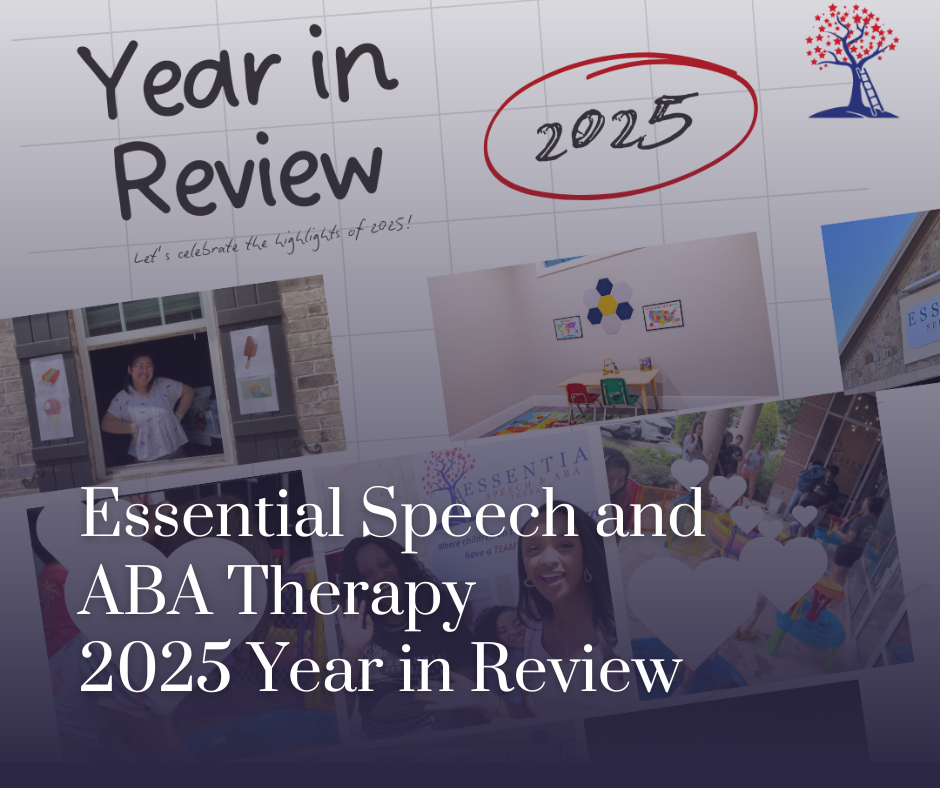
    Essential Speech and ABA Therapy 2025 Year in Review

    Uncategorized

    As 2025 comes to a close, we are taking a moment to reflect on the milestones, lessons, and successes that shaped our year. Over the past twelve months, our team came together in countless ways: through innovative projects, collaborative problem-solving, and steady growth, both individually and collectively.

    In this Year in Review, team members from across the organization share their perspectives on what made this year meaningful. From leadership and operations to clinical care and marketing, each section offers a distinct viewpoint while contributing to a shared story of progress, learning, and impact.

    We are proud of what we accomplished together and energized by what lies ahead. As we look toward 2026, we carry forward both the wins and the lessons that defined this year.

    Leadership: Excellence That Grows Into Mastery

    Nafisa Obi

    In 2025, leadership at Essential Speech and ABA Therapy evolved from excellence into mastery. This was a year of increased focus, discipline, and intention in how we lead; not because quality was ever lacking, but because growth requires greater clarity, stronger systems, and deeper accountability.

    Everything we built this year was guided by a single principle:

    Families deserve excellence.

    Owners deserve leadership.

    Systems should make both possible at scale.

    Leadership That Delivers

    We did not shift our values this year. We strengthened our execution.

    In 2025:

    • 100 percent of franchise owners received direct leadership support.

    • Every owner participated in training, mentoring, or structured check-ins.

    • A Director of Operations joined the leadership team to oversee system-wide execution and strengthen owner support.

    • A performance benchmark system was introduced to provide clarity, foresight, and accountability.

    • A real-time KPI dashboard was deployed across the network.

    • We expanded into four new states and five active markets while opening additional locations.

    • The franchise leadership team completed over 300 hours of industry conferences and professional development focused on billing, compliance, franchising, and ABA innovation.

    • We worked directly alongside franchisees to strengthen training, clinical oversight, and business operations.

    • CEUs and clinical mentorship were expanded system-wide.

    We did not build for optics. We built for precision.

    What Leadership Learned This Year

    The challenge of 2025 was not whether owners were committed. It was whether commitment alone was enough.

    We learned that strong intention must be matched with strong infrastructure.

    Owners did not need more encouragement. They needed visibility.

    They did not need pressure. They needed clarity.

    Dashboards replaced assumptions with reality.

    Benchmarks replaced isolation with context.

    Check-ins replaced uncertainty with direction.

    Leadership did not become heavier this year. It became sharper.

    A Moment Worth Remembering

    One moment captured the transformation we worked toward.

    An owner reviewed their dashboard and said, “I finally understand my business.”

    It wasn’t a slogan or a sound bite. It was clarity. That moment reflected what leadership delivered in 2025 – confidence built through structure, visibility, and tools.

    Carrying This Forward Into 2026

    The systems are built. The team is in place. The standard is clear.

    In 2026, execution becomes tighter, faster, and more exact.

    Our focus includes:

    • Advanced leadership development tied to clinic performance.

    • Reduced onboarding friction for new locations.

    • Expanded KPI dashboards with deeper clinical, financial, and staffing insights.

    • Earlier intervention protocols for operational risk.

    • Stronger internal auditing and compliance systems.

    • Continued focus on owner profitability through benchmarking and coaching.

    Growth will never outrun structure.

    What distinguishes this organization is not how quickly it grows, but how intentionally it grows. Excellence built this company. Mastery is taking it forward.

    Clinical: Scaling Clinical Excellence Without Compromising Care

    Shelby Nelson

    In 2025, we nearly doubled the number of clients receiving direct support services through our dedicated clinicians. This meant more children learning to communicate their needs, build new skills, engage socially, and reduce interfering behaviors by gaining the ability to advocate for themselves.

    We also continued strengthening relationships among clinicians across locations. Each month, BCBAs participated in collaborative meetings to discuss cases, refine clinical approaches, and expand their skillsets, despite physical distance.

    This year, CEUs were offered on topics including:

    • Clinical Efficiency

    • Assent and Trauma-Assumed Care

    • Family Guidance strategies

    • Titration and Discharge Planning

    • Lead RBT utilization

    • Clinical dosage and recommendations

    • Universal protocols and RBT training

    • Complex cases and coping strategies

    • Preparing for updated BACB protocols in 2026

    Working across multiple states allowed us to collaborate with clinicians from diverse backgrounds and exceptional skillsets. Our BCBAs consistently report high satisfaction, citing autonomy in practice paired with strong support through mentorship, CEUs, and access to the Director of Clinical Quality.

    Client outcomes continue to be the most meaningful measure of success. One family shared that within two weeks of services, their daughter began labeling emotions, imitating peers, and showing significant reductions in aggression, progress that had not previously been seen at home.

    Our goal remains supporting the entire family unit. Clinicians are trained to deliver strong family guidance and ensure support extends beyond the clinic into the home and community.

    Looking ahead to 2026, we are focused on expanding support for RBTs through a tiered supervision system and developing in-house training modules aligned with our values, Early Start Denver Model principles, and assent-based care. We are also increasing engagement with external CEU speakers and national conferences to ensure continued learning and collaboration across the field.

    Operations: Creating Stability While the System Scaled

    Jessica Camp

    In 2025, Operations centered on one core responsibility: ensuring growth remained sustainable, ethical, and operationally sound as the organization expanded. As visibility increased and clinical teams served more families, Operations worked behind the scenes to maintain stability, clarity, and consistency.

    One major focus was improving intake and onboarding processes to support increased demand without overwhelming staff or compromising care. Across the system, the average time from assessment to first therapy session moved closer to the 25-day benchmark, with nearly 60 percent of newly created clients progressing to active therapy.

    As clinics expanded, Operations worked to protect clinician time, align capacity with demand, and reduce friction. System-wide data reflected this balance, with consistent average monthly revenue per client and billable time averaging approximately 72 percent.

    Much of the work this year focused on reducing operational noise: clarifying expectations, addressing bottlenecks, and supporting clinics through moments of strain. One of the most meaningful indicators of progress was hearing owners express a clearer understanding of how intake, staffing, scheduling, and performance data connect.

    By the end of 2025, growth was supported, systems were tested, and lessons were learned. This work laid the foundation for a more refined, efficient, and scalable future.

    Marketing: Expanding Visibility, Driving Growth, and Empowering Parents

    Ben Gerding

    2025 marked the start of our second full year as a franchise system, making it a pivotal year for strengthening our marketing foundation as we prepared for growth in new markets.

    Historically, many clinics grew primarily through word-of-mouth. While this reflected strong trust from families, it was not a scalable strategy nationwide. Expansion required predictable systems, consistent brand visibility, and marketing infrastructure franchisees could confidently operate.

    We consolidated tracking across platforms and introduced a centralized management framework, giving franchisees autonomy while simplifying setup and ensuring consistency.

    We also expanded our content team, increasing access to templates, customized materials, and educational resources. Our content strategy moved beyond enrollment-focused messaging to deliver meaningful, educational information for parents, whether or not they were clients.

    Through November, results included:

    Website Growth

    • Total users increased by 217 percent

    • New users increased by 215.7 percent

    • Key website events increased by 733.9 percent

    Social Media Growth

    • Reach increased by 236.7 percent

    • Impressions increased by 681.5 percent

    • Engagement increased by 57.6 percent

    Every clinic experienced year-over-year organic social growth, reinforcing the value of meaningful content.

    One standout initiative was the “ABCs of ABA” mini-series, offering short, accessible explanations of ABA terms for parents. It became a favorite across communities and exemplified our commitment to education.

    As we head into 2026, these systems are ready to support new franchisees while helping existing clinics maximize capacity and impact.

    Conclusion: Looking Ahead

    As we close the chapter on 2025, we are grateful for the collaboration, commitment, and care that defined this year. Each challenge and achievement strengthened our foundation and prepared us for what’s ahead.

    In 2026, we will continue building on this momentum—growing thoughtfully, refining our systems, and deepening our impact for families, communities, and our team.

    Here’s to another year of progress, purpose, and shared success.

    Why We Prioritize Full-Time Services (And How It’s Sustainable)

    Uncategorized

    Disclaimer: Throughout this article we refer to comprehensive ABA services (typically 25-40 hours per week) as “full-time” to ensure clarity to families, business owners, and practitioners alike.

    At Essential Speech and ABA Therapy, we’ve built our entire model around full-time (comprehensive), medically necessary therapy services. This choice isn’t arbitrary; it’s a purposeful decision driven by our clinical ethics and rooted in our mission and core values.

    Even still, we understand this approach can raise some questions, especially from potential franchisees.

    Many ask:

    • “Why can’t we offer part-time services to increase revenue?”

    • “Wouldn’t we serve more kids and maximize profits by allowing a hybrid or flexible model?”

    Our commitment to full-time, comprehensive services does not just reflect our commitment to delivering meaningful, evidence-based practices –it is also sustainable, profitable, and deeply aligned with our mission.

    Let’s walk through why.

    Full-Time Therapy Leads to Better Clinical Outcomes

    ABA therapy is most effective when it’s intensive and consistent, especially for early learners between 18 months and 6 years old. These early years are the most critical window for brain development. Studies show that early intensive behavioral intervention (EIBI) delivered at 25–40 hours per week produces the most meaningful gains in communication, behavior, and developmental progress.

    One of the most widely cited studies in the field found that 47% of children who received 40 hours per week of intensive ABA therapy achieved average-range intellectual functioning, compared to just 2% of children in the control group receiving less than 10 hours per week (Lovaas, 1987). Another meta-analysis concluded that EIBI produces moderate to large effects across cognitive, communication, and adaptive functioning domains, particularly when started before the age of 5 and delivered at a high intensity (Reichow et al., 2012).

    The National Research Council (2001) recommends a minimum of 25 hours per week of structured intervention, stating that children with autism need high-intensity, year-round instruction to make meaningful progress. And more recent research supports this view: treatment intensity is one of the strongest predictors of success in ABA therapy (Granpeesheh et al., 2009; Harris & Handleman, 2000).

    This is why we primarily serve clients who require comprehensive services. This does not mean that every child who comes into our centers for an assessment gets assigned 25-40 hours. If a child receives an assessment for ABA services that determines a lower medically necessary clinical recommendation, that child is generally referred to an in-home or community-based provider. We recognize that this decision may raise an eyebrow from a business perspective, but we make this decision due to the clinical impact, which is what every business decision should consider.

    Our intention here is to ensure children who do not need intensive services are able to receive services in their natural environment instead of being placed into a more intrusive setting like an ABA clinic. Our clinics are set up to systematically address barriers for children who need intensive services, not just take in every child with a diagnosis.

    Offering both full-time and part-time options might seem like a reasonable compromise—but in practice, it dilutes the clinical integrity of the program, overcomplicates operations, and sends mixed messages to families about what’s truly necessary for meaningful progress.

    When a child is recommended for full-time ABA, anything less isn’t just a lighter version—it’s a clinically insufficient version. Providing part-time as an option when a child requires comprehensive services implies it is equally effective, which it’s not, according to the research. And when families opt for fewer hours due to convenience, insurance limitations, or misconceptions, the child is the one who suffers.

    We’ve made a deliberate decision not to offer a menu of therapy “packages” because this isn’t retail. It’s healthcare.

    Just as you wouldn’t expect a cardiologist to offer a 30-minute-a-week heart treatment when 10 hours is the minimum needed—we don’t offer part-time care when full-time is what’s medically necessary.

    We owe that level of honesty and integrity to the families we serve.

    Providing part-time therapy solely for convenience or profit undermines the needs of the children we serve. Our approach is grounded in doing what is clinically appropriate—not what is most convenient.

    Ethical Care Means Putting Kids First. 

    Too many clinics offer part-time sessions just to increase volume or fill staffing gaps. But ABA isn’t a daycare, and we’re not here to provide short bursts of babysitting. We’re here to provide intensive medical intervention, backed by data, supervision, and measurable goals.

    That means:

    • Only accepting children for whom full-time ABA therapy is medically necessary.

    • Creating individualized plans that truly move the needle.

    • Titrating down hours only after a child meets meaningful milestones—not before.

    Ethical care requires restraint. It requires saying “no” to part-time services when we know it won’t produce meaningful outcomes. It requires holding our ground when others compromise.

    Full-Time Services Actually Simplify Operations

    Franchisees often assume part-time services would bring in more clients. But in reality, offering part-time care can create complexity, instability, and staff burnout.

    Here’s why:

    1. Scheduling Becomes a Nightmare

    Trying to juggle morning-only, afternoon-only, or M/W/F clients creates massive inefficiencies in your clinic’s schedule. You can’t build a stable routine, and your RBTs end up with scattered hours and unpredictable shifts.

    Full-time clients = full-time RBTs = a sustainable staffing model.

    2. Staff Retention Improves with Full-Time

    RBTs thrive on consistency. When they know they’ll work 30–40 hours a week with the same few children, they stay longer, perform better, and feel more connected to their work.

    Part-time clients lead to piecemeal shifts, lower hours, and higher turnover.

    3. Supervision and Quality Are Easier to Manage

    BCBAs are responsible for ongoing case supervision which includes protocol modification, treatment planning, family guidance meetings, and treatment fidelity checks. It’s far easier to maintain high clinical standards with full-time clients whose data and behavior they review daily rather than a rotating door of part-time children who attend only a few hours a week.

    Full-Time Services Are More Financially Sustainable Than You Think

    Disclaimer: The information below discusses financial considerations; however, we want to emphasize that the primary and most important question in any decision should always be: Does this benefit the child receiving services? While financial sustainability is necessary to ensure continued access to care, it should never come at the expense of clinical quality. The following considerations are shared to support business owners in maintaining operations so that children can continue to receive the therapeutic support they need. 

    Let’s bust a myth: more clients does not equal more profit.

    In fact, fewer full-time clients can produce more consistent, predictable revenue with lower administrative overhead.

    Here’s how our full-time model supports profitability:

    1. Each Client Fills a Full Schedule

    Instead of needing 3–4 part-time clients to fill one RBT’s week, one full-time client covers the entire position. This means:

    • Fewer assessments and treatment plans for your BCBA to write

    • Lower intake and onboarding costs

    • Fewer parent training/family guidance sessions to coordinate

    • Reduced insurance claims and billing issues

    2. Insurance Reimbursement is Stronger for Medically Necessary Full-Time Care

    Our model aligns with insurance best practices—including early intensive behavior intervention (EIBI). When services are medically justified and appropriately documented, insurers are more likely to approve full-time hours and pay reliably.

    Part-time clients often come with requests for shorter plans, more reauthorizations, and greater scrutiny.

    3. Titration Provides a Natural Off-Ramp

    We do not keep children in full-time ABA services indefinitely. As they progress, our clinical teams titrate hours down, easing children into part-time care and eventually graduation.

    This allows your clinic to gradually bring in new full-time clients as others step down—creating a pipeline of continuity and sustainability.

    Parents Choose Us Because of This Model

    One of the most powerful marketing messages we have is simple: We only take clients we can truly help.

    Parents trust us because they know we won’t just “add them to a list.” We tell the truth, set clear expectations, and work with only the children we believe we can support to meaningful success.

    This transparency builds long-term trust, loyalty, and word-of-mouth referrals that drive clinic growth without costly marketing gimmicks.

    How This Model Supports Our Franchisees

    We get it –this approach feels bold. It takes courage to say “no” to a family seeking part-time care. It takes patience to fill full-time slots before opening your doors.

    But we don’t leave you to figure it out alone. Our franchise model was built around full-time services and includes:

    • Robust training and mentorship on how to explain our model to parents

    • Clinical support to justify full-time hours through clear assessments

    • Administrative templates and scripts for onboarding and schedulingMarketing materials that position you as the gold standard

    • Ongoing KPI reviews to track and adjust your clinic’s growth strategy

    We don’t just say full-time is better. We prove it—with tools, training, and a proven path to sustainable success.

    In Summary: Full-Time Is the Ethical, Clinical, and Financial Gold Standard

    Our choice to offer only full-time services isn’t limiting, it’s liberating.

    It ensures:

    • Kids get the best possible chance at long-term success

    • Staff are supported and retained through stable schedules

    • Franchisees build businesses rooted in integrity and sustainability

    We’re not interested in running high-volume, low-quality clinics. We’re here to create a lasting impact for children, families, and the owners who take this mission to heart.

    If you’re ready to join a network that puts quality over shortcuts, and lives changed over numbers on a spreadsheet, we’d love to welcome you to Essential Speech and ABA Therapy.

    Let’s grow the right way –together.

    References

    Granpeesheh, D., Tarbox, J., Dixon, D. R., Peters-Scheffer, N., & Kornack, J. (2009). Evidence-based practices and treatment for children with autism. Journal of Clinical Psychology, 65(8), 825–838. https://doi.org/10.1002/jclp.20692

    Harris, S. L., & Handleman, J. S. (2000). Age and IQ at intake as predictors of placement for young children with autism: A four- to six-year follow-up. Journal of Autism and Developmental Disorders, 30(2), 137–142.

    Lovaas, O. I. (1987). Behavioral treatment and normal educational and intellectual functioning in young autistic children. Journal of Consulting and Clinical Psychology, 55(1), 3–9. https://doi.org/10.1037/0022-006X.55.1.3

    National Research Council. (2001). Educating children with autism. Washington, DC: National Academy Press.

    Reichow, B., Barton, E. E., Boyd, B. A., & Hume, K. (2012). Early intensive behavioral intervention (EIBI) for young children with autism spectrum disorders (ASD). Cochrane Database of Systematic Reviews, 2012(10). https://doi.org/10.1002/14651858.CD009260.pub2

    Clean Billing: What it Means and Why It’s Non-Negotiable

    Uncategorized

    When you imagine running your own Essential Speech and ABA Therapy clinic, what comes to mind? Perhaps it’s the joy of seeing children thrive, the fulfillment of owning a mission-driven business, or the freedom of being your own boss. All of those things are very real and attainable. But there’s another essential, often overlooked piece that can make or break your success: clean billing.

    In our world, clean billing isn’t just a buzzword—it’s a standard, a safeguard, and a reflection of our core values.

    Let’s break down what clean billing means, why it’s non-negotiable in our model, and how our trusted affiliate billing partner, Essential Billing Solutions (EBS), helps you do it right from day one.

    What is Clean Billing?

    Clean billing means that the claims submitted for reimbursement are complete, accurate, timely, and fully compliant with payer guidelines and state/federal regulations. A “clean” claim is one that gets approved and paid—without delays, denials, or audits due to preventable errors.

    Clean billing is:

    • Accurate: All CPT codes, modifiers, session durations, and provider details are correct.

    • Timely: Claims are submitted on schedule, avoiding timely filing denials.

    • Compliant: Every claim meets payer-specific and Medicaid/commercial insurance requirements.

    • Ethical: There’s zero padding, misrepresentation, or billing for services not rendered.

    • Defensible: Documentation and session notes support every billed service.

    In short, clean billing is what ensures your revenue is stable, your clinic stays compliant, and your integrity remains intact.

    Why It Matters So Much in ABA, Speech Therapy and Occupational Therapy

    The therapy world—especially early intervention and autism care—is highly regulated. ABA therapy, in particular, is under scrutiny due to past industry abuses by organizations that prioritized profit over ethical care. We have no interest in replicating those models.

    At Essential Speech and ABA Therapy, we’ve built our reputation on trust. Parents trust us with their children. Payers trust us to bill honestly. Regulators trust that we’re not just compliant—we’re leading by example.

    Clean billing:

    • Protects your clinicians’ licenses and your livelihood.

    • Preserves client trust by ensuring transparency in services rendered.

    • Prevents audits and investigations that can stall or shutter a business.

    • Promotes sustainability by keeping revenue flowing without interruption.

    • Aligns with our values—especially integrity and excellence.

    We often say: how you bill is a reflection of how you care. That’s why we don’t cut corners.

    What Happens When Billing Isn’t Clean?

    Let’s be blunt—dirty billing has serious consequences.

    Here’s what’s at stake:

    • Delayed or lost revenue from denials, rejections, and recoupments

    • Damage to your clinic’s reputation if payers, parents, or partners lose confidence

    • Legal and financial risk, including fines, audits, or even loss of insurance contracts

    • Franchise termination if the problem becomes systemic or threatens our brand

    This is why clean billing is non-negotiable in our franchise system. It’s not just a recommendation—it’s a standard that every franchisee must uphold.

    The Franchise Advantage: You Don’t Have to Do This Alone

    One of the top reasons new practice owners struggle is billing. It’s technical. It’s constantly changing. And most BCBAs, SLPs, and OTs didn’t go to school to become billing experts.

    That’s why all franchisees have access to our trusted affiliate billing company:

    Essential Billing Solutions (EBS).

    EBS specializes in medical billing for ABA, Speech, and Occupational Therapy—and they’ve been embedded in our company culture since day one. They know the ins and outs of Medicaid and commercial billing in multiple states. And they’re as committed to clean, ethical billing as we are.

    Why EBS Makes Clean Billing Simple

    When you work with EBS, you gain:

    • A team that knows your clinic inside and out—including your staffing model, session types, payers, and billing cadence.

    • Proactive audits that catch problems before they become rejections or denials.

    • Real-time support for coding, overlapping services, reauthorizations, and documentation compliance.

    • Transparent reporting so you can track your revenue, collections, and payer trends with confidence.

    Built-in collaboration—EBS works closely with each clinic’s team to align scheduling, session notes, and billing in a seamless system.

    Built on Trust, Powered by Partnership

    At Essential Speech and ABA Therapy, we take great pride in building something that lasts—not just for the children we serve, but for the business owners we partner with. Clean billing is part of that foundation.

    We don’t ask you to be perfect—but we do ask you to care. And that means making billing decisions rooted in honesty, not shortcuts.

    We’ve done the hard work of creating a streamlined system so that our franchisees can focus on what really matters: delivering excellent care and growing a business that reflects their values.

    When you partner with us, you’re not just buying a franchise. You’re joining a movement of purpose-driven providers committed to doing things the right way—even when no one’s watching.

    Ready to Build a Business You Can Be Proud Of?

    If you’re looking for a franchise opportunity that prioritizes clinical integrity, operational excellence, and sustainable growth, you’re in the right place.

    And if you’re worried about the technical side of billing—we’ve got you covered. Clean billing isn’t just possible here. It’s expected, supported, and celebrated.

    Let’s build something great together.

    Learn more about franchising with Essential Speech and ABA Therapy and our billing support through Essential Billing Solutions (EBS).